Save the Guy: Funny Choice
- 4.1
- Rating
- 10.00M
- Installs
- Free
- Price

 Analysis by App-foxy
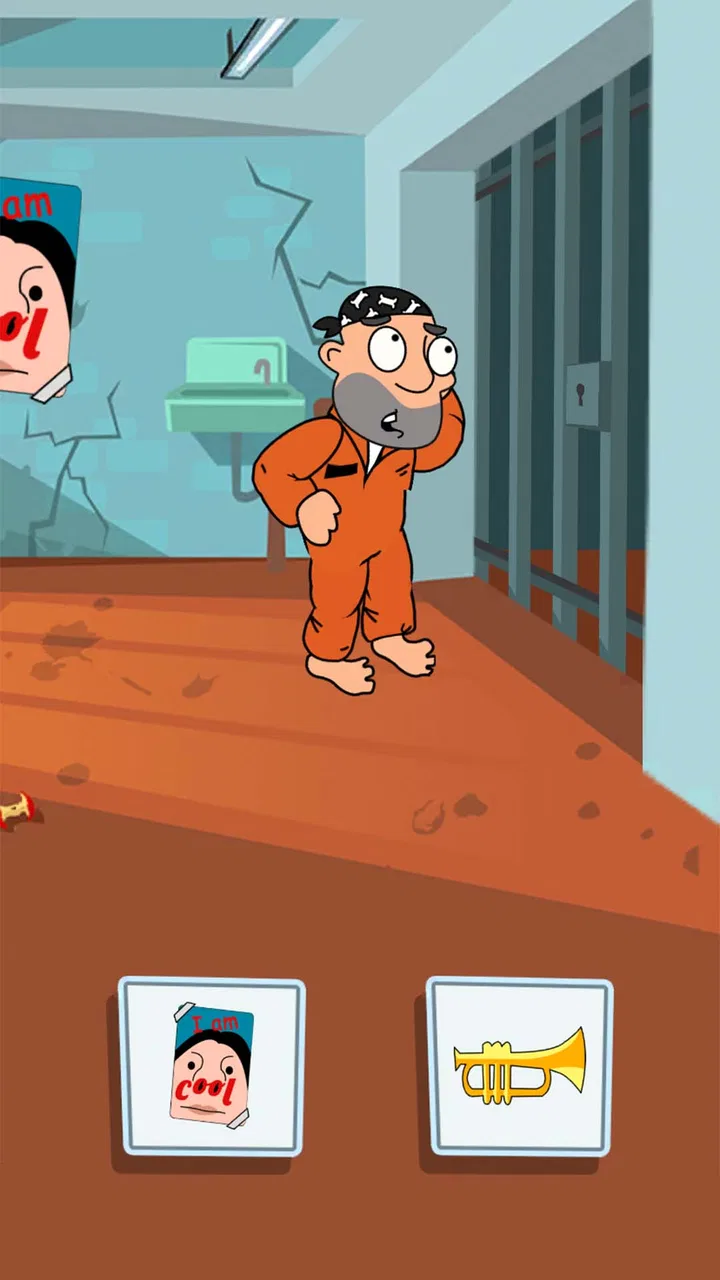
I approached Save the Guy: Funny Choice expecting a light adventure game built around quick decisions, and that is exactly the kind of experience it offers. The central appeal is simple: a character gets into difficult situations, I choose between possible actions, and the result depends on whether I can read the scene correctly. The prison-break theme gives the opening a clear sense of urgency, while the humorous presentation keeps the mood from becoming too serious.
What makes it worth trying is not deep combat or a large world to explore. This is a choice-driven game designed for short sessions, where the satisfaction comes from spotting the sensible option and seeing the story move forward. I found it easy to pick up when I had only a few minutes, but it also encouraged me to replay decisions after making a mistake. If you enjoy interactive stories, visual puzzles and playful situations more than traditional action controls, this adventure is aimed at you.
What the first few minutes feel like
The opening is best understood as a sequence of small problems rather than a conventional platforming level. I was not asked to master a complicated control scheme. Instead, the game placed a decision in front of me and made the choice itself the main challenge. That makes the first meaningful success reassuring: I could progress simply by paying attention, thinking about the immediate danger and selecting the option that seemed most practical.
You May Also Like

 Blood Strike: 2.5 Anniversary
Blood Strike’s Loadouts Turn Every Drop Into a Tactical Gamble
A close look at Blood Strike’s custom loadouts: how fast access to signature weapons reshapes its battle royale rhythm, rewards preparation, and narrows the gap between fights.

 Pandora - Music & Podcasts
Pandora’s Music Is Easy to Start, but Harder to Recover
Pandora’s strength is its low-effort path from a seed to a station. Its weak spot is how much confidence it asks you to place in connection, setup, and quiet recovery.

 8 Ball Pool
 Is Built on Rivalries, Rematches, and Routine
A close look at the rivalries, rematches, shared routines, and unanswered safety questions that turn a quick pool match into a persistent mobile community.

 Samsung Music
’s Quiet Strength Is Playing What You Already Own
Its reach comes less from spectacle than from dependable access to a personal library. That simplicity is both the app’s strongest retention engine and its ceiling.

 AccuWeather: Weather Radar
AccuWeather Review: A Quick, Clear Forecast for Everyday Decisions
For everyday plans, the best forecast is the one you can understand quickly. AccuWeather makes rain timing, radar, and local conditions easy to act on, with a few trade-offs.

 Hill Climb Racing
Why Hill Climb Racing Still Turns Crashes Into One More Run
A tiny car, a bumpy hill and one more upgrade: Hill Climb Racing keeps resurfacing because its simple chaos makes every near-miss feel personal.
More From Our News Desk
View All News


The tone is deliberately casual. The situations are framed to be entertaining, so failure feels more like a joke or a prompt to try again than a serious setback. That matters for new players because the game does not demand that you understand a large set of rules before enjoying it. The basic rhythm becomes clear quickly: observe, decide, watch the outcome and adjust your approach when the result is not what you expected.
I would not recommend treating every choice as a test with one obvious answer. Some scenes are designed to make me pause and consider what the character needs immediately, rather than what would be useful in a broader story. A choice that looks bold may be less helpful than a quiet or defensive action. My most reliable approach was to examine the whole scene before tapping, especially when an option appeared designed to tempt an impulsive response.
The game is free to start, which makes it easy to test without committing money first. It is rated Teen, so parents should consider whether its humor, situations and presentation match the age of the person who will play it. On Android, it requires at least version 7.0 of the operating system. That keeps the entry requirement fairly approachable for users with older compatible devices.
Getting ready without overthinking it
After installing it, I would begin with a quiet first session rather than trying to rush through the opening. The early decisions teach the game’s logic indirectly. There is no benefit in tapping as fast as possible, because the main skill is noticing what each option is likely to cause. A first-time player who gives each scene a brief look will usually get more from the experience than someone who treats it like a reflex game.
The developer is Brightika, Inc., and the game has attracted a sizeable audience, with more than ten million installs and an average rating of 4.1 from roughly 386 thousand ratings. Those figures suggest that the basic format has broad appeal, although they should not be mistaken for a guarantee that every player will enjoy the same style of humor or pacing. The game’s current version is 0.1.737, so keeping the installed app updated is a sensible way to use the version currently offered.
One practical point is that the free starting point does not mean every part of the experience is necessarily free of spending prompts. In-app purchases range from $4.99 to $7.99 per item. I would recommend deciding in advance whether you want to spend anything, especially if the game becomes part of a child’s device routine. For an adult testing the concept, the safest approach is to play first and judge whether the extra purchases would genuinely improve your enjoyment rather than buying immediately.
There is also a useful mental setup for this particular game: expect trial and error. If a decision goes badly, that does not automatically mean the game has failed to explain itself. Sometimes the entertainment comes from seeing an unexpected consequence and then reconsidering the scene. I found that accepting occasional failure made the game feel more relaxed, while trying to achieve a perfect run made the simple choices feel unnecessarily stressful.
How to reach the first satisfying success
For a new player, the first goal should be modest: complete a short chain of decisions without tapping on impulse. I would look for environmental clues, think about the immediate problem and select the option that protects the character’s position. This method is more dependable than choosing the funniest-looking action every time. The game’s comedy can make a risky option attractive, but the most entertaining answer is not always the one that moves the situation forward.
A useful habit is to separate information from decoration. Bright visuals, exaggerated expressions and an unusual object may draw attention, but the important clue is usually connected to the character’s immediate obstacle. Before choosing, I ask myself three questions: what is threatening the character, what would change that situation, and which option addresses that change most directly? This small routine turns the opening from random guessing into a readable decision process.
When I make a wrong choice, I prefer to remember the consequence rather than simply repeat the same scene. That turns failure into a note for the next attempt. If an action creates a new problem, I can rule out similar impulsive choices in later situations. This is one of the game’s understated strengths: it gives casual players a reason to observe patterns without requiring the formal complexity of a puzzle adventure.
The prison-break premise also helps establish a clear short-term objective. I am not wandering through an abstract story with no idea what success means. The character needs to get out of trouble, and each decision is connected to that immediate purpose. That focus is helpful for first-time users because it gives context to the choices. Even when the presentation is silly, I generally know what kind of outcome I should be working toward.
For everyday use, I can imagine playing during a commute, while waiting for an appointment or during a short break. The game suits those moments better than a long-form role-playing adventure that expects a substantial uninterrupted session. I would avoid starting a new sequence if I knew I might need to put the phone down immediately, though, because stopping in the middle of a decision can interrupt the flow and make the next session less satisfying.
Where new players may get confused
The biggest source of confusion is the difference between a funny option and a useful option. The game’s title and presentation encourage playful thinking, but the correct decision often depends on practical cause and effect. I initially found it tempting to choose whatever seemed most dramatic. A better strategy was to imagine what would happen one moment later, then choose the action that left the character with fewer problems.
Another point is that the game should not be judged as though it were a conventional action adventure. There is no reason to expect the same kind of exploration, combat precision or character development found in a larger console-style title. Its appeal is concentrated in the decision scenes. If you want a story with lengthy dialogue, detailed inventory management or a large map, this will probably feel too narrow. If you want quick choices with comic consequences, that narrow focus becomes an advantage.
I also think players should be realistic about repetition. A choice-based structure can lose some surprise after I understand the logic of a scene. The replay value then depends on whether I enjoy testing alternative actions and watching different outcomes. Someone who wants constant novelty may move on quickly, while someone who likes experimenting with “what if?” decisions may find enough reason to revisit situations.
The free-to-play structure is another consideration. Purchase items priced between $4.99 and $7.99 can make the experience less comfortable for people who dislike monetization in casual games. I would not install it with the assumption that spending is required for the basic test of the concept. Instead, I would play the opening, decide whether the decision format holds my attention and only then consider whether any optional purchase feels worthwhile. That order keeps the financial choice under my control.
Performance expectations should also be sensible. The minimum Android requirement is 7.0, but compatibility on paper is not the same as personal comfort. On an older phone, I would close unnecessary apps before playing and make sure the device has enough free space for normal updates. I would also avoid judging the game from a single brief session if the first scenes feel simple; the format reveals its appeal through the accumulation of choices rather than through one spectacular opening moment.
Who will enjoy it, and who should skip it
I would recommend this game to people who like interactive stories, quick visual decisions and humorous escape scenarios. It is particularly suitable for players who want something approachable without learning a complex control layout. It can also work well for someone introducing a friend to mobile adventure games, because the basic interaction is easy to explain: look at the situation, choose an action and see what follows.
It is less suitable for players who need precise control, competitive pressure or a deep progression system. Fans of action games may find the lack of direct movement and combat too passive. Fans of serious narrative adventures may find the jokes and exaggerated situations too lightweight. I would also skip it if I strongly dislike retrying a decision after an unexpected result, because trial and error is part of the experience rather than an occasional flaw.
Compared with a traditional puzzle game, this one is more immediate and less demanding in terms of rules. A puzzle title may ask me to manage several clues across a larger space, while this game usually places the decision close to the problem. Compared with a branching visual novel, it is more focused on quick actions and comic outcomes than on long conversations or carefully developed relationships. That middle position is its clearest identity.
For families, the Teen rating deserves attention rather than being treated as a minor label. I would preview the tone before handing the game to a younger player, particularly if the prison setting or its comic treatment could be uncomfortable. For adults, the rating simply signals that this is not being presented as a preschool experience. The right audience is someone who enjoys playful tension and can appreciate exaggerated situations without expecting realism.
Small habits that make the experience better
My first practical tip is to pause before every decision, even when the options look obvious. The game rewards attention more than speed. My second is to remember the immediate objective instead of being distracted by the most colorful object in the scene. My third is to treat a failed attempt as information: note what the choice changed, then use that clue when the situation appears again.
I also found it useful to play with a specific purpose. One session can be about progressing as far as possible, while another can be about testing the alternative choice in a scene I already understand. Mixing those goals prevents the game from becoming a repetitive search for the single correct answer. It also makes the humor more enjoyable because I am sometimes choosing an option simply to see how the situation reacts.
Another trade-off is session length. Short play is one of the game’s strengths, but short scenes can feel fragmented if I expect a continuous adventure. I get the best results when I treat it as a collection of compact story moments rather than a replacement for a long evening game. That expectation makes the simple structure feel intentional instead of underdeveloped.
If purchase prompts appear, I would wait until I have decided whether the core choice mechanic remains interesting after the novelty of the prison-break setup fades. The game’s average rating of 4.1, supported by around 386 thousand ratings and roughly 1.8 thousand written reviews, indicates a generally positive reception with room for personal differences. For me, that reinforces the idea of trying the free experience first rather than assuming the audience response will match my own preferences.
My recommendation after spending time with it
Save the Guy: Funny Choice succeeds when I approach it as a quick, humorous decision game rather than a full-scale adventure. Its strongest quality is the low barrier to entry: I can understand the premise quickly, make progress without mastering complicated controls and replay a scene when a choice goes wrong. The prison-break setting gives the early moments direction, while the comic outcomes keep mistakes from feeling punishing.
Its limitations are equally clear. The decision format may become repetitive for players who want extensive exploration, and the humor will not suit everyone. The presence of in-app purchases means I would keep an eye on spending, especially on a shared family device. I also would not choose it over a deeper puzzle adventure when I want layered clues or a substantial narrative.
For a first-time user, my suggested path is straightforward: install the free game, take time to read the first situations, aim for one successful chain of sensible choices and only then decide whether the format deserves a regular place on your phone. That approach gives you a fair impression without pressure. If you enjoy seeing how one small decision changes a ridiculous escape attempt, this adventure is easy to recommend for short, casual sessions. If you need depth, realism or demanding action, another genre will serve you better.
FAQs for Save the Guy: Funny Choice
01What is Save the Guy: Funny Choice about?
Save the Guy: Funny Choice is a puzzle game where players make decisions to guide the protagonist through various scenarios. Each choice leads to different outcomes, testing your problem-solving skills and creativity. It's designed to entertain with its humorous situations and engaging gameplay.
02Is Save the Guy: Funny Choice free to play?
Yes, Save the Guy: Funny Choice is free to download and play on both Android and iOS platforms. However, it may include in-app purchases and advertisements. Players can enjoy the main features without spending money, but can opt for purchases to enhance their experience.
03Does Save the Guy: Funny Choice require an internet connection?
Save the Guy: Funny Choice can be played offline, which is great for users who want to enjoy the game without an internet connection. However, certain features or updates might require being online, especially if you want to access new content or make in-app purchases.
04What makes Save the Guy: Funny Choice unique compared to other puzzle games?
Save the Guy: Funny Choice stands out due to its emphasis on humor and storytelling within puzzle-solving. The game combines lighthearted scenarios with clever puzzles, ensuring players not only solve challenges but also enjoy a narrative-driven experience. Its unique blend of comedy and strategy appeals to a wide audience.
05Are there any age restrictions for playing Save the Guy: Funny Choice?
Save the Guy: Funny Choice is generally suitable for players of all ages due to its family-friendly content. However, it's always a good idea for parents to review the game first to ensure it aligns with their preferences for content and difficulty level for younger players.
Pros
- Engaging puzzles with humorous outcomes.
- Simple mechanics
- easy to learn.
- Vibrant graphics appeal to all ages.
- Frequent updates with new levels.
- Offline play available
- no internet needed.
Cons
- Ads can be intrusive and frequent.
- Limited replay value after completion.
- Some puzzles feel too easy.
- In-app purchases necessary for hints.
- Occasional glitches may disrupt play.

Save the Guy: Funny Choice
Gallery